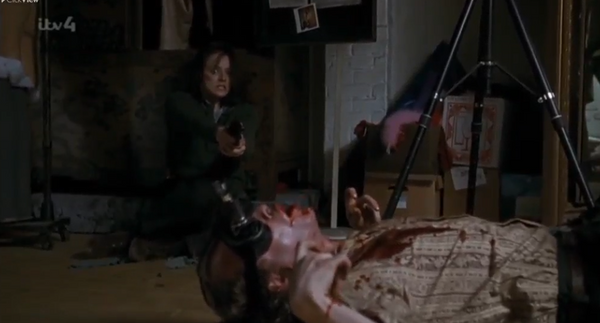
Silence of the lambs analysis


Comparison between SOTL and Manhunter
1) How does each film portray Hannibal Lecter's relationship with the protagonist, and what does that say about their differing views on mentorship, manipulation, and psychological dependency?
- Manhunter portrays Lecter as a remote, hostile manipulator who does not share any real attachment with Graham. It is about danger, distrust, and psychological strain, not mentorship.
Silence of the Lambs positions Lecter as a twisted mentor to Clarice; it insinuates controlled manipulation, mutual fascination, and dependency that is rewarding for hunter and hunted alike.
Overall: Manhunter = adversarial & corrosive; Silence = manipulative but symbiotic


2) In what ways do the visual styles of Manhunter (with its neon-infused, clinical aesthetic) and Silence of the Lambs (with its grounded, shadow-laden naturalism) shape the audience’s sense of dread and intimacy?
- Manhunter's clinical aesthetic creates a cold distance, detachment, a sense of stalking from afar.
The naturalistic shadows in Silence of the Lambs produce a sense of intimate, claustrophobic tension, proximity, and psychological closeness.
Overall: Manhunter = atmospheric distance; Silence = personal unease.


3) How does the film navigate gender and power through its depiction of Clarice within male-dominated spaces?
Look at staging, blocking, and camera placement to examine how her vulnerability and agency are shown?
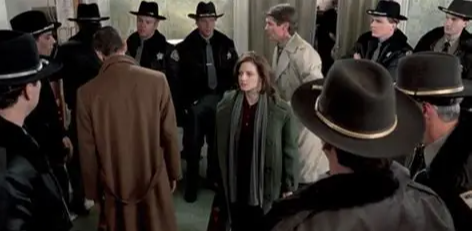
- The film explores gender and power through Clarice. It uses staging, blocking, and camera placement to show both her vulnerability and her strength in male-dominated environments. She often appears smaller and is surrounded by groups of men. Their bodies and looks create a feeling of pressure and isolation. This blocking makes her seem trapped, highlighting her outsider status. At the same time, the camera often aligns with her perspective. Close-ups capture men speaking directly into the lens, letting the audience feel the weight of their gaze. Even when the framing puts her at a disadvantage, Clarice often steps forward or positions herself among the men. This shows her confidence and control. This combination of visual vulnerability and assertive movement makes it clear that even in male-dominated spaces, Clarice constantly reclaims her power.

4) What techniques does the film use to humanise or villainise its antagonists, and how do these choices influence audience empathy or discomfort?
Compare Buffalo Bill and Hannibal Lecter through lighting, performance style, and mise-en-scène.
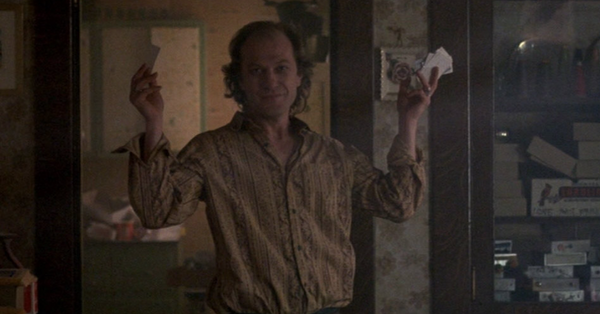
- Lecter is frequently bathed in clean, even lighting that emphasizes his calm intellect. Hopkins' subtly controlled, polite performance lends a credibility to composure rather than chaos. His neat and orderly cell reinforces this impression of refinement. These humanise him slightly, leaving the audience with feelings of fascination tainted with unease. Buffalo Bill is captured with darker, more menacing lighting that insinuates danger. His performance is more emotive and unstable, serving to detach any audience sympathy. The messy basement setting is disturbing and reinforces unpredictability. He feels more threatening, and hence less sympathetic, because of these factors. This presentation-lecter as controlled versus Bill as chaotic-serves to dictate viewer reaction. Lecter becomes a disturbing yet captivating figure, whereas Bill is altogether more terrifying and extraterrestrial.

5) How does the final act (the basement sequence) employ editing, lighting, and suspense construction to manipulate audience expectations?
- The final basement sequence manipulates audience expectations through editing, lighting, and suspense construction. Editing jolts the audience with tension through cross-cutting between Clarice and the FBI team to make them believe the agents are going to catch up first with Buffalo Bill, while the reality is totally opposite: she is alone with him. The use of the POV shot of Buffalo Bill, and the lighting; darkness and green night-vision perspective—places the audience in Clarice's vulnerable position while also revealing Bill's predatory advantage, it makes us the audience feel scared, as Bill has the upper hand. Such visual contrast enhances fear and uncertainty. In constructing suspense, the film has slowed down the pace, used the effect of silence, and let the audience see the danger before Clarice does; it manipulates expectations to heighten the shock when she finally fires her gun and breaks the tension.